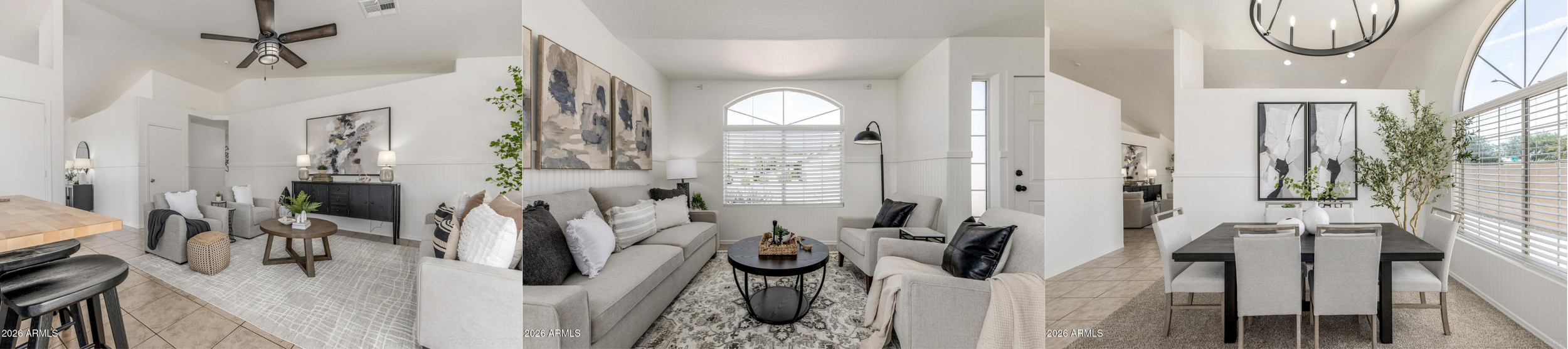

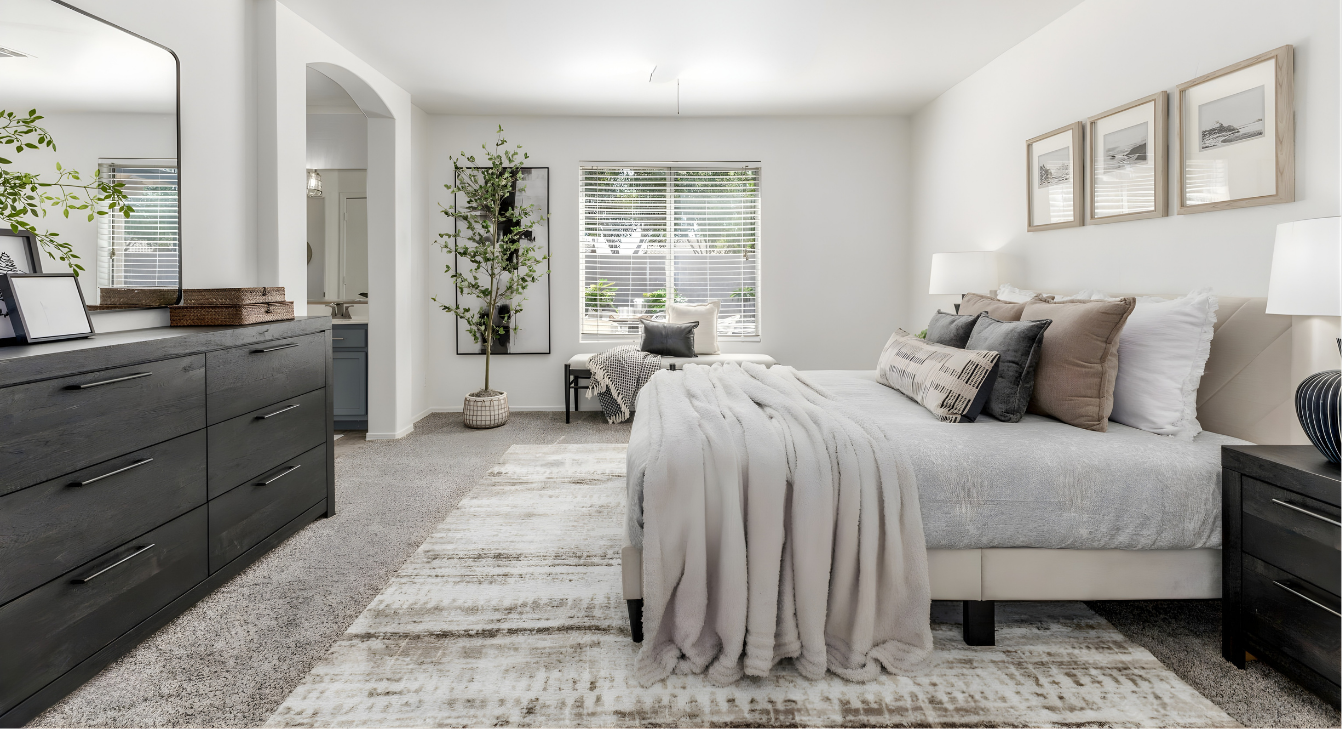
AI vs Real
Home Staging
AI can generate stunning images, but buyers do not purchase photos. They purchase homes. When the online presentation looks magazine worthy and the in person experience feels empty or underwhelming, it creates cognitive dissonance. The buyer feels the disconnect immediately. Even if they cannot articulate it, something feels off.
That subtle tension can quietly shift a buyer from excitement to skepticism. Instead of imagining their future in the home, buyers begin questioning what else might not meet expectations. Real staging ensures the experience in-person matches the promise online. What buyers see is what they feel the moment they walk through the front door.
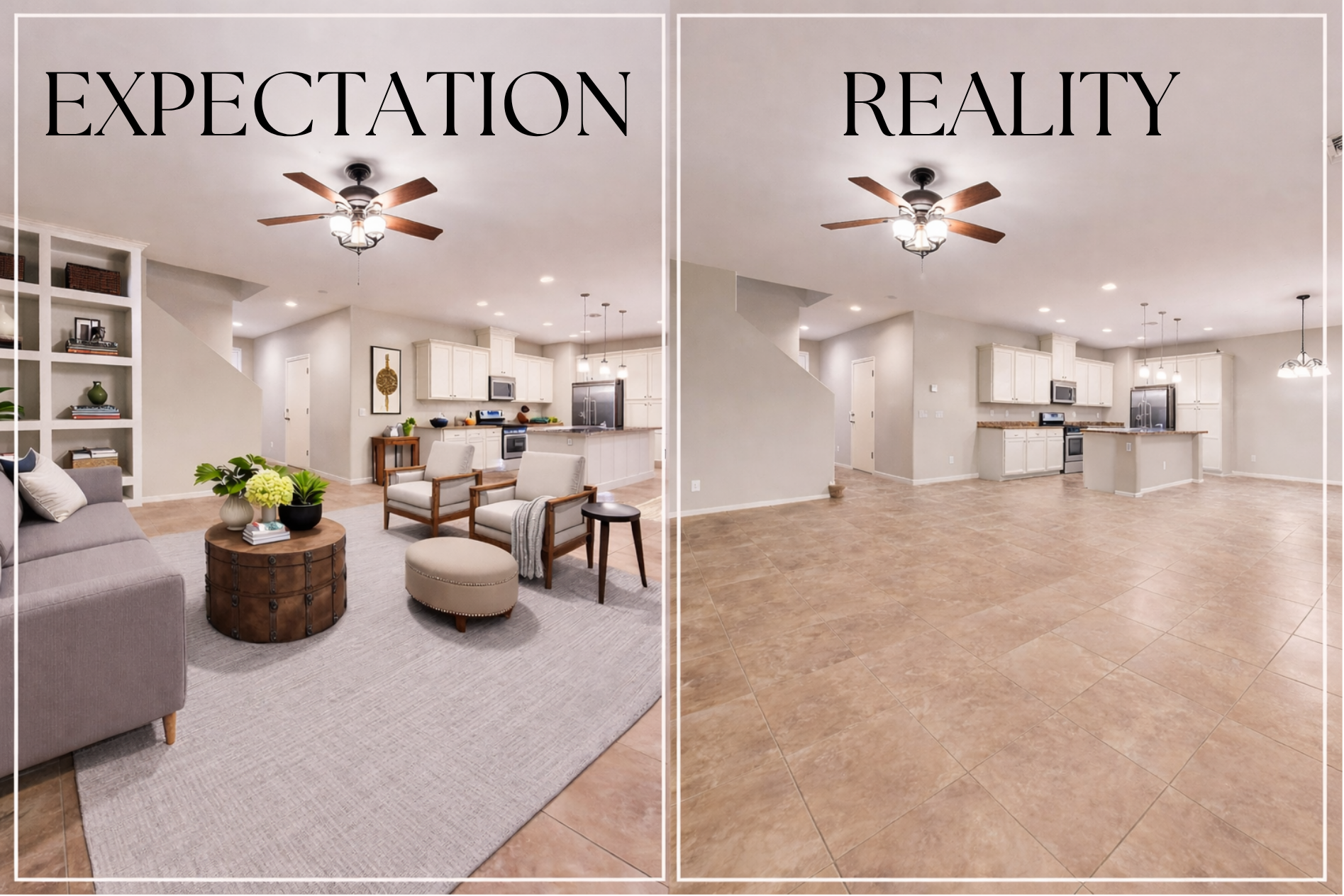
Imagine a buyer scrolling through listings and seeing a beautifully staged home priced at $900k. The photos communicate warmth and luxury. Then they tour the property and find empty rooms that feel smaller and less refined than the photos suggested.
When the real life experience falls short, buyers subconsciously adjust value downward. If the home does not feel like an $900k experience, they begin to justify offering less. Real staging protects pricing power because it supports the value being asked. It aligns perception with reality, which strengthens negotiation rather than weakening it.
AI staging has changed the real estate industry in powerful ways. It is fast. It is affordable. It can create beautiful listing photos that catch attention online. For certain properties, especially lower priced homes that simply need to be marketed and moved, AI staging can absolutely serve a purpose. But when a seller wants to protect value, stand out, and create a premium experience, real home staging delivers something AI simply cannot.
There is a shared human experience that happens when someone walks into a beautifully designed room. The space feels welcoming. It feels intentional.That emotional response cannot be digitally rendered into real life.
In professional home staging, we fine tune that response. The furniture and decor are never meant to compete with the home. They are there to support it. The stage sets the mood while your home takes center stage.
The Experience Must Match the Photos
Perception Drives Value
Why Real Home Staging Still Wins in a Digital World
AI staging has changed the real estate industry in powerful ways. It is fast. It is affordable. It can create beautiful listing photos that catch attention online. For certain properties, especially lower priced homes that simply need to be marketed and moved, AI staging can absolutely serve a purpose. But when a seller wants to protect value, stand out, and create a premium experience, real home staging delivers something AI simply cannot.
The Experience Must Match the Photos
Make the right investment for your home
AI can generate stunning images, but buyers don’t purchase photos. They purchase homes. When the online presentation looks magazine worthy and the in-person experience feels underwhelming, it creates cognitive dissonance. The buyer feels the disconnect immediately. Even if they cannot articulate it, something feels off.
That subtle tension can quietly shift a buyer from excitement to skepticism. Instead of imagining their future in the home, buyers begin questioning what else might not meet expectations. Real staging ensures the experience in-person matches the promise online. What buyers see is what they feel the moment they walk through the front door.
Perception Drives Value
Imagine a buyer scrolling through listings and seeing a beautifully staged home priced at $900k. The photos communicate warmth and luxury. Then they tour the property and find empty rooms that feel smaller and less refined than the photos suggested.
When the real life experience falls short, buyers subconsciously adjust value downward. If the home does not feel like an $900k experience, they begin to justify offering less. Real staging protects pricing power because it supports the value being asked. It aligns perception with reality, which strengthens negotiation rather than weakening it.
Emotion Is What Sells Homes
There is a shared human experience that happens when someone walks into a beautifully designed room. The space feels welcoming. It feels intentional.That emotional response cannot be digitally rendered into real life.
In professional home staging, we fine tune that response. The furniture and decor are never meant to compete with the home. They are there to support it. The stage sets the mood while your home takes center stage.
In Phoenix, Standing Out Is Not Optional
In the Phoenix market, people are calling it balanced. But if we are honest, it feels like nobody’s market. Prices remain high even if they are softening slightly. Interest rates may fall, or they may stay steady for years. Sellers cannot rely on market momentum alone to do the heavy lifting.
With more than 22,000 homes for sale in 2026, buyers are swimming in options. They are comparing properties back to back. A well staged home is no longer a luxury feature. It is becoming the baseline expectation. If a home is not thoughtfully prepared, it risks blending into the crowd instead of rising above it.
Make the right investment for your home
At East Valley Home Staging, we believe AI staging has its place. But when the goal is to make a statement, protect value, and create a seamless experience from online to in person, real staging remains the stronger choice. In today’s Phoenix market, that difference can mean everything.